


Sean replaced our tickets with good ones! We sat at the 45 yard line in Section 25, Row 10?, Seats 1 & 2. Now, see map....
We took DART Rail, which was a mess. When we tried to get back to the car (parked in Ft. Worth), we realized that it was too packed and headed to mom's for early dinner. Later, we caught the rail to the car and started on our drive, tails tucked back home.
I took my contacts out and gave him directions back to I-35, then blinked for anbout an hour... When I awoke, I asked how far we'd gotten, ie if we were past the Red River yet because he drives so fast. He then reads the next sign "Now entering Waco, Austin x# of miles!?!" Poor guy, I didn't think I'd would have to tell him to go north on I-35!
We turned around and headed north. I also took over driving. We made it back to Norman at about 1am. Very exhausted.
Sunday, we went to the U2 concert, which was awesome. We arrived just as the Black Eyed Peas were finishing up with their "It's Going to be a Good Night" song.
Despite OU's loss, I think Sean had a good birthday weekend.
Tuesday, October 20, 2009
OU vs Texas Game

Friday, October 16, 2009
Kinkajou
Here we go again, the weird things that people own. We got another blood sample of an animal we didn't recognize and [I've] had to look up. Looked like dog blood, and we ran it thru the analyzer as such, lol. (The analyzer has setting for cat, dog, horse, camelid, cow, sheep/goat, and people, but no Kinkajou or Coatamundi setting, go figure.) We've had a Turkey Vulture and a Bearded Dragon (lizard), 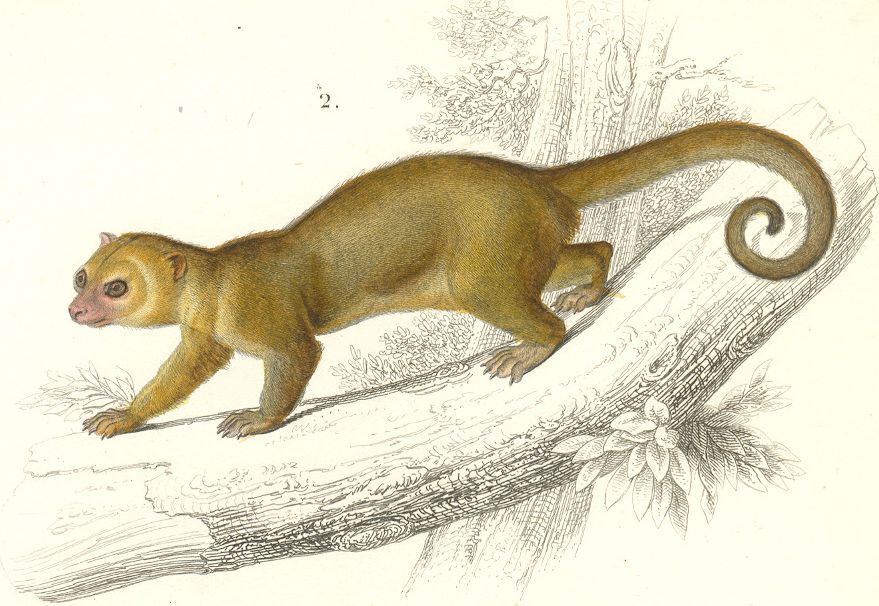
Taxomony:
Kindgom: Animalia
Phylum: Chordata
Class: Mammilia
Order: Carnivora
Family: Procyonidae (Raccoon Family)
Genus: Potos
Species: P.flavus
Subspecies: P. flavus flavus, chapadensis, chiriquensis, megalotus, meridensis, modestus, nocturnus
Genetic studies have shown that the kinkajous were an early offshoot of the ancestral procyonid line and are not closely related to any of the other extant procyonids. Their closest relatives are coatimundis.
Common Names: Kinkajou, Honey Bear, Micoleón, Lion Monkey, Night Walker
Range: Central and South America.
Habitat: Rainforest.
Description: Bodies are covered by an outer coat of golden woolly fur with a soft gray undercoat. Legs are short with bare palms and sharp claws. Head is round with small ears, and a short muzzle that contains sharp teeth. They have a 5 inch long extrudable tongue (12.7cm), which is used in reaching nectar and honey. Scent glands are near the mouth, on the throat, and on the belly, but they lack of anal scent glands. Tail is prehensile.
Length: 16-22 inches (42-57cm) body + 15-22 inches (40-56cm) tail
Weight: 4-7 lbs.
Diet: Omnivore (ripe fruit (90%), figs, flowers, insects, ants, eggs).
Behaviour: Nocturnal. Typically forage alone, but occasionally forage in small groups, and sometimes associate with coatimundis. They sleep in family units and groom one another. “Kinkajous are sometimes kept as pets. They are playful, generally quiet and docile, and have no noticeable odor. However, they can occasionally be aggressive. Kinkajous dislike being awake during the day, and dislike noise and sudden movements. An agitated kinkajou may emit a scream and attack, usually clawing its victim and sometimes biting deeply.” (Wikipedia) According to ABC News Paris Hilton was bitten by her pet Kinkajou.
Breeding/Mating: Non-seasonal, year-round. Males have an enlarged bone that protrudes at the inside of his wrist, which he rubs the females sides with during mating. This bone is usually bare skinned in the male, but fur covered in the female.
Gestation: 112 to 118 days
Young: 1-2 cubs produced per litter
Lifespan: 23-41 years
Predators: Fox, Tayra (Tolomucos), Margay, Jaguar, Ocelot, Jaguarundi, People (for fur and meat).
References:
Honolulu Zoo: http://www.honoluluzoo.org/kinkajou.htm
Wikipedia: http://en.wikipedia.org/wiki/Kinkajou


Tuesday, October 13, 2009
Coatimundi
The rotation I'm currently on right now is Clinical Pathology (ie looking at blood smears and tissue samples). Someone submitted some Coatimundi (which they spelled Cotomundai) blood for us to examine. It's blood looks very similar to that of a dog, which is quite interesting. Since not one of the 5 veterinarian in the room even had the slightest clue 
Taxomony:
Kindgom: Animalia
Phylum: Chordata
Class: Mammilia
Order: Carnivora
Family: Procynidae (Raccoon Family)
Genus: Nasua
Species: N. narica & N. nasua
Common Names: White-nosed Coati (N. narica), Brown-nosed Coati (N. nasua), Pizote, Antoon, Tejón, Quash, Small Mexican Badger.
Range: Southwestern USA to South America.
Habitat: Wooded areas of the Americas from altitudes up to 3,500 metres (11,000 ft).
Description: Bodies can be dark brown, reddish, or yellow. Masked eyes with gray muzzles, chins, and throats. Snout is long and shovel-shaped extending beyond lower jaw. Mouth contains crushing molars and large canine teeth. The tail has six or seven light bands, and is not prehensile.
Length: 2 feet + 24" tail
Weight: 9 lbs. (range <25lbs)>


Behaviour: Diurnal. Females and sexually immature males form ground foraging in family groups of 5-12, but can be as large as 30. Adult males are solitary. Young cubs are left with a pair of babysitters, similar to meerkats.
*Easily domesticated.
Breeding/Mating: Non-seasonal
Gestation: 77 days
Young: 3-5 cubs produced per litter
Lifespan: 7 years
Predators: boas, raptors, hunting cats, and tayras (tolomucos).
*Now, eventhough various internet sites said this was a reasonably easily domesticated/tamed animal, as someone said "If 5 veterinarians have to look it up because they don't know what it even looks like [on google because it's not in our text books either], then people probably shouldn't have it."
Wednesday, October 7, 2009
Cotton Bowl Tickets
Sean recieved our Cotton Bowl tickets for the OU vs Texas game. Our seats: Section 15, Row 11, Seats 7 & 8. Now, see map....
Friday, September 4, 2009
No More Mango
Mango died this evening of dyspnea and severe pulmonary edema. Not quite sure what the primary cause was yet (L-CHF? HCM? toxin?), but I did send him to necropsy. He appeared BAR Friday morning and evening, but about an hour after I came home, I noticed him panting so I rushed him to school. He was on O2 for over an hour and became progressively worse despite Lasix (furosemide). It was very sad, especially since he had adjusted so well. His 3rd birthday would have been September 19th.
L-CHF: Left sided Congestive Heart Failure
HCM: Hypertrophic Cardiomyopathy
BAR: Bright, Alert, and Responsive
Update: No toxins were found in his system (but that's not unusual). He did not have HCM or CHF. The pathologist suspected a severe infectious vasculitis, possibly Chaggas.
Monday, August 31, 2009
Thank You Aunt Shane & Uncle Mike!
Thank you for sponsoring my ECFVG registration!
Your Niece, Karla
Saturday, August 29, 2009
My Rotation Schedule
Dates Rotation
8/31-9/20 Field Services
9/21-10/11 Small Animal Internal Medicine
10/12-11/1 Clin Path
11/2-11/22 Community Practice
11/23-12/13 Vacation (to study for the BCSE)
*12/1-12/8* *ECFVG-BCSE*
12/14-12/20 Anesthesiology
12/21-12/27 off (maybe)
12/28-1/3 on
1/4-1/10 Anesthesiolog
1/11-1/31 Food Animal Medicine
2/1-2/21 Animal Shelter
2/22-3/14 Radiology
3/15-4/4 ICU? (I'd like to change this so I can study)
*4/12-4/24* *NAVLE*
4/5-5/3 Zoological Medicine
5/3-5/23 Equine Medicine
5/24-6/13 Diagnostics
6/14-7/5 Small Animal Medicine
*6/25 *Grand Rounds Presentation*
7/6-7/25 Equine Surgery
7/26-8/15 Preceptor (Externship)
8/16-9/6 Preceptor (Externship)